If you have thousands of LinkedIn connections but only a small fraction are truly relevant to what you sell, you’re not failing. You’re just seeing a common reality: most networks grow faster than they get “clean.”
The fix is not deleting people or starting from zero. The fix is running a LinkedIn outreach campaign that helps you (1) define who matters, (2) build a focused target list, (3) message like a real human, and (4) track follow-ups without turning into spam.
Below is a practical, general approach you can apply to almost any B2B service, consulting offer, agency, or product.
1) Define “relevant” before you message anyone in your LinkedIn outreach campaign
Before tools, templates, or automation, you need a tight definition of who you’re trying to reach.
Ask yourself:
Who is the buyer? (Founder, Head of Marketing, HR Director, Operations Lead, CTO, Procurement, etc.)
Who influences the buyer? (Team leads, managers, specialists who recommend vendors)
What “best-fit” company looks like
Industry
Size (headcount or revenue range)
Geography and time zones
What problem you solve right now
Pick 1–2 core problems you can solve quickly and confidently
Your offer in one sentence
Example structure: “You help [type of company] achieve [outcome] in [timeframe] without [common risk].”
If you can’t say who you help and what outcome you deliver, your LinkedIn outreach campaign will feel random, and random outreach gets ignored.
2) Segment your network so you stop treating everyone the same
Even if most of your network is not a fit today, it can still help you:
Get referrals and introductions
Provide social proof (reactions and comments)
Warm up visibility for your content
Use a simple segmentation:
Ideal prospects: decision-makers and close influencers you would happily book a call with
Near prospects: adjacent roles that can introduce you to the right person
Non-prospects: keep them, but do not spend outreach energy here
This single step makes your LinkedIn outreach campaign calmer and more effective because you stop expecting the wrong people to convert.
3) Build a clean target list using search and saved lists
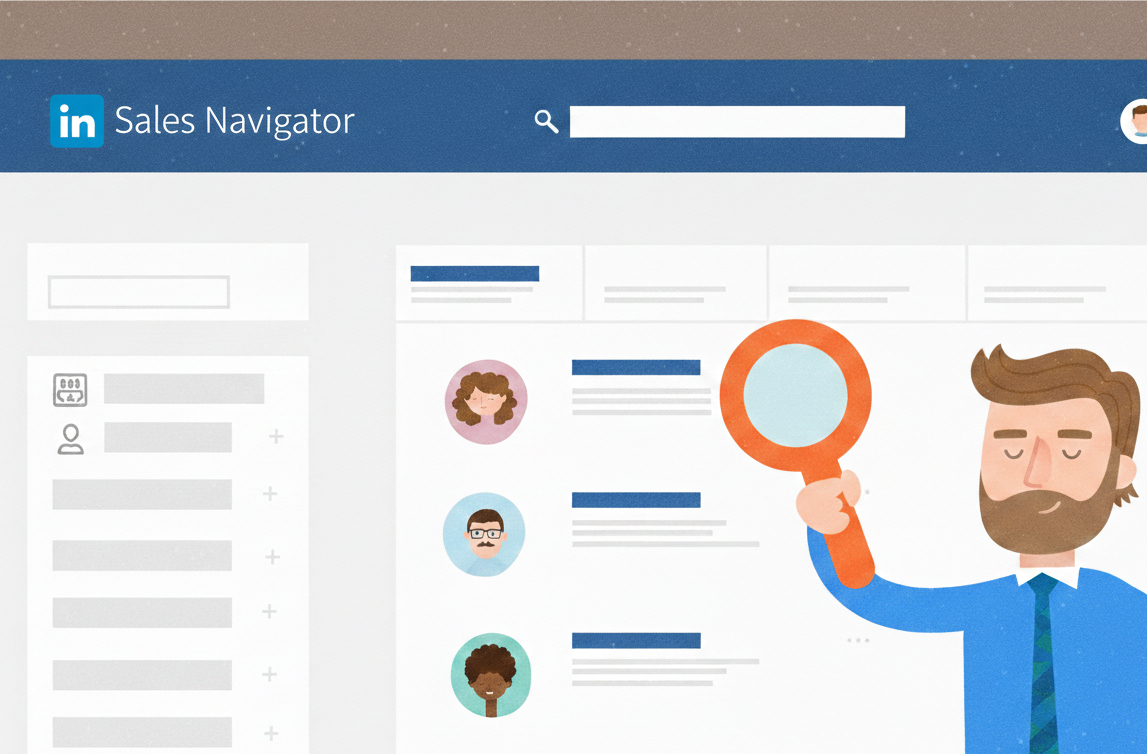
If you’re serious about consistency, consider using LinkedIn Sales Navigator for filtering and list-building (seniority, function, company size, geography, and more).
A good workflow is: build lists first, then message. LinkedIn also publishes a practical “how to use” guide for Sales Navigator that maps well to list-building and outreach.
What matters is not the tool. It’s the output: a short, high-quality lead list you can work through without rushing.
4) Make your profile and credibility match your outreach
In a LinkedIn outreach campaign, people often do this sequence:
1) read your message → 2) click your profile → 3) decide whether you feel credible
Do a quick credibility check:
Does your headline clearly say who you help and what outcome you deliver?
Do you have proof elements (case study, results, portfolio, client logos, testimonials)?
Is your Featured section used to show your strongest “trust assets” (even 2–3 is enough)?
You don’t need to post daily. You do need your profile to feel consistent with your message.
5) Use a message structure that feels human, not spammy
Here’s a simple structure that works across industries.
Connection request (no pitch)
Keep it specific and calm.
“Hi [Name], I noticed you’re leading [area] at [Company]. I share practical insights on [topic]. Open to connecting?”
After they accept (context + one easy question)
“Thanks for connecting. Quick question: are you more focused this quarter on (1) growth, (2) efficiency, or (3) risk reduction?”
Follow-up (micro-value)
If they choose an option, send a small, genuinely helpful insight:
“Makes sense. One quick win I’ve seen: [1–2 lines]. If helpful, I can share a short checklist.”
Soft CTA (no pressure)
“If it’s useful, happy to compare notes for 15 minutes. Totally fine if not.”
This works because your LinkedIn outreach campaign becomes a conversation, not a pitch.
6) Stay within LinkedIn rules and avoid risky behavior patterns
LinkedIn can restrict accounts for policy violations, so your safest approach is to keep volumes realistic, avoid repetitive behavior, and act like a normal professional user. LinkedIn’s User Agreement and Professional Community Policies are the right places to review expectations and conduct standards.
LinkedIn also explains that violating policies can lead to enforcement actions like restriction on accounts or content.
Practical “stay-human” guidelines:
Keep daily activity consistent, not spiky
Personalize messages lightly but genuinely
Avoid copy-paste templates that look identical across recipients
7) Track the pipeline so your LinkedIn outreach campaign improves every week
If you don’t track, you repeat the same week forever.
You can start with a simple CRM. HubSpot CRM offers a free tier many people use to track contacts, notes, and follow-ups. The goal is not fancy dashboards.
The goal is knowing:
who you contacted
who replied
who needs a follow-up
who booked a call
what message worked
8) Measure the right metrics
In your LinkedIn outreach campaign, focus on:
Connection acceptance rate (varies by niche and targeting quality)
Reply rate
Positive reply rate (people who show interest)
Calls booked per week
Lead-to-call conversion rate
Then change one variable at a time (targeting OR message OR offer), so you know what improved results.
Read more on our blog and follow us on LinkedIn: