Can You A/B Test LinkedIn Posts With Ads to Predict Organic Performance?
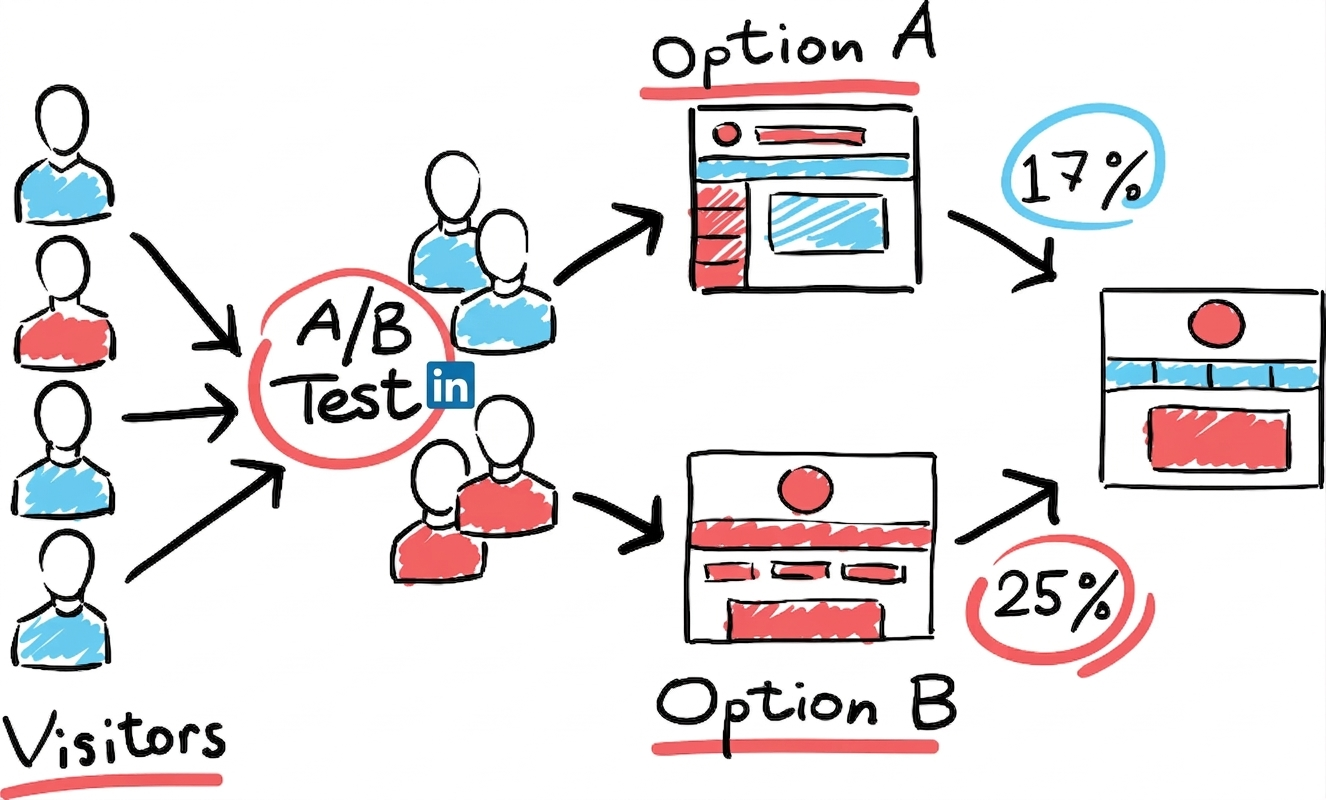
If you’ve ever looked at two versions of a post on LinkedIn and wished you could know which one will perform better before publishing, the idea of A/B testing with ads can be appealing. The concept is simple: promote two draft variations as paid campaigns, see which performs better, and then publish the winner organically.
The short answer: yes, you can do this , and it can be useful, but paid results don’t always predict organic performance. The behavior, delivery mechanisms, and engagement signals differ between paid ads and organic posts.
Below is a practical, accurate breakdown of how this works and when it actually helps.
What Are You Really Trying to Optimize?
Before running any experiment, clarify:
What does winning mean?
Likes, comments, profile visits, website clicks, or inbound leads?Who is the post for?
Customers, peers, employers, industry professionals, or hiring managers?What type of post is it?
Story, tactical how-to, opinion piece, case study, or company update?
The closer your paid test mirrors your organic reality, the more reliable the results.
Paid A/B Testing as a Draft Screening Tool
The workflow usually looks like this:
Create Post A and Post B (same topic, different hook, angle, or CTA).
Promote both variations as ads to the same audience.
Compare performance.
Publish the winner organically.
This works like a mini focus group, measuring actual behavior, not opinions.
But remember: ads ≠ are organic.
Why Paid Results Don’t Always Predict Organic Results?
1. Users interact with ads differently
Even with perfect targeting, some users instinctively disengage from anything labeled sponsored.
Organic posts benefit from:
Audience familiarity
Early social proof
Friend-of-friend distribution
Higher trust and intent
2. The optimization engine is different
Paid ads are optimized to the objective you choose: clicks, impressions, or engagement. Organic posts are distributed based on early engagement, relationships, and dwell time.
LinkedIn explains its optimization process here
3. Format mismatches create false signals
If you test a text-only post using an image ad, the experience is not equivalent. The closer the promoted format mimics an organic post, the better.
When Paid A/B Testing Is Predictive
Paid tests tend to be helpful when:
Your audience is cold or semi-cold
You’re testing big swings (e.g., hook or angle), not tiny wording changes
Your goal is clicks or conversions
You match the ad format closely to an organic post
A Simple, Effective Way to Run This Test
1. Change one major variable only
Examples:
Question hook vs. bold statement
How we did this vs. the biggest mistakes people make
CTA to comment vs. CTA to DM
Testing too many variables at once makes results meaningless.
2. Keep targeting identical
Audience, placements, and schedule must match.
3. Choose an objective aligned with your organic goal
Conversation → Engagement
Traffic → Website visits
Leads → Lead generation or conversions
4. Use enough budget to reduce randomness
Avoid micro budgets like $5/day for 24 hours.
Instead, aim for:
3–5 days
Meaningful impressions on each variation
5. Decide the winning metric before starting
Examples:
Awareness → Impressions + early engagement rate
Traffic → CTR + landing page views
Pipeline → CTR + conversions
Which Metrics Predict Organic Performance?
Often Helpful
Hook strength (thumb-stop rate or early engagement)
CTR (if the organic version includes a link)
Message clarity (comment quality)
Often Misleading
Raw like count
Comment volume (can include low-quality comments)
Ad engagement rate when your organic audience is warm
An Organic Alternative: Soft A/B Testing
If paid promotion isn’t ideal, you can test organically by:
Post Version A for one week and Version B the next
Testing hooks in comments or newsletters
Using smaller, controlled audiences (e.g., relevant groups)
For additional A/B testing fundamentals, this resource from Optimizely is helpful
There are also introductory A/B testing videos on YouTube, such as:
The Most Overlooked Factor: Organic Distribution Is Relationship-Weighted
Organic reach on LinkedIn is heavily influenced by:
Who follows you
Who engages with you early
How much time users spend reading
Whether your content sparks conversation
This means a post that performs poorly in paid testing can still perform well organically, especially for creators with strong audience affinity.
Should You Use Paid A/B Testing? A Quick Framework
Use it when:
You’re launching something and need the best angle
Your company page has inconsistent organic reach
You’re testing positioning
You want conversions, not vanity metrics
Skip it when:
You already have a strong, engaged organic audience
You’re testing minor wording changes
Your main goal is community-building
Read more on our blog and follow us on LinkedIn