Is LinkedIn Job Promotion Really Worth the Cost?
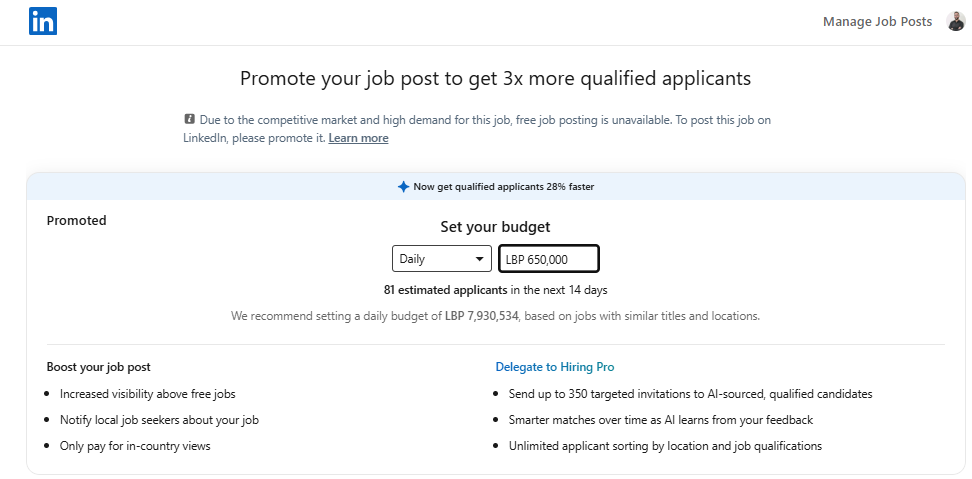
If you’ve ever promoted a job on LinkedIn and watched your budget vanish with little to no results, you’re not imagining it, this can happen. While it may feel like the platform took your money, the issue usually comes down to how job promotion delivery works, your job post setup, competition, and market dynamics.
Below is a clear breakdown of why promotions sometimes underperform and what you can do to fix it before spending more.
Why Does a LinkedIn Job Post Sometimes Burn Budget with Low Results?
Yes, spending a few hundred dollars and getting very few impressions is possible. This happens more often in competitive industries, niche roles, or when the system decides your job post is unlikely to drive actions like clicks or applications.
Common reasons this happens:
High cost-per-click in your industry or nicheEXEED Digitals
Heavy competition from recruiters and large brands
Weak relevance signals in your job post content
Limited distribution due to incomplete company profile details
Occasional delivery or billing issues (rare but possible)
LinkedIn explains how their promoted job distribution works here
Key Questions to Review Before Spending Again
These simple checks make a huge difference in job performance:
1. Did your job title match actual search intent?
Clear and specific titles perform better than broad ones.
Example:
Instead of Consultant, try CRM Implementation Consultant (Contract).
2. Is your location or remote setting correct?
Some cities are extremely competitive. Mislabeling remote as onsite also hurts reach.
3. Did the first 2–3 lines answer what applicants care about?
People skim; your hook must match clear intent and value.
4. Did you add too many screening questions or friction points?
More friction = fewer applicants.
5. Does your company page look credible?
Make sure you have:
A logo
A website link
Accurate headcount
At least a few recent posts
A strong job description also matters. This guide from Indeed is useful
Impressions Don’t Equal Applicants
Even if your post reaches 1,000 people, you may still get zero applicants if the job description doesn’t convert.
Strong applications only happen when:
The role exists within an active talent pool
The title matches what people search
The compensation or value exchange is clear
The application process is simple
The employer looks trustworthy
If you’re hiring consultants, be even more explicit about:
Scope
Budget or range
Deliverables
Timeline
Expected hours
Why LinkedIn Job Costs Feel High Right Now?
Several realities are driving up costs:
More job categories now require payment to promote
Recruiters and big companies heavily outbid smaller budgets
Weak early engagement signals can limit your visibility
LinkedIn is no longer set it and forget it, you need outbound effort too
A Practical Fix-It Checklist Before Re-Launching
1. Rewrite the job title to align with search intent
Example:
B2B Growth Strategy Consultant (Contract).
2. Rewrite the opening like a landing-page hook
Hit the essentials immediately: problem → outcome → scope → timeline.
3. Add compensation or a range
Even approximate budgets improve conversions.
4. Reduce application friction
Ask for the minimum needed at the start.
5. Improve your company page
Add a logo, banner, tagline, website, and at least two recent posts.
6. Use outbound sourcing, not just the job post
Find talent using LinkedIn search (freelancers, ex-agency pros, niche experts).
Send a short message: outcome → scope → CTA.
A quick guide to simple outreach messages
7. Consider alternative platforms for consultants
What if You Believe the Spend Was Incorrect?
If your job spent money without delivering impressions, do this:
Screenshot performance + billing
Check whether the job paused due to budget reached or billing issues
Contact LinkedIn support with clear, factual details
Final Takeaway
Treat LinkedIn Like a System, not a Slot Machine
It’s understandable to feel frustrated after spending money with little return.
But the solution isn't spent more, it’s improving:
role clarity,
job post conversion,
employer credibility, and
your outbound sourcing process.
Read more on our blog and follow us on LinkedIn: