Why Hooks Are More Important Than Ever?
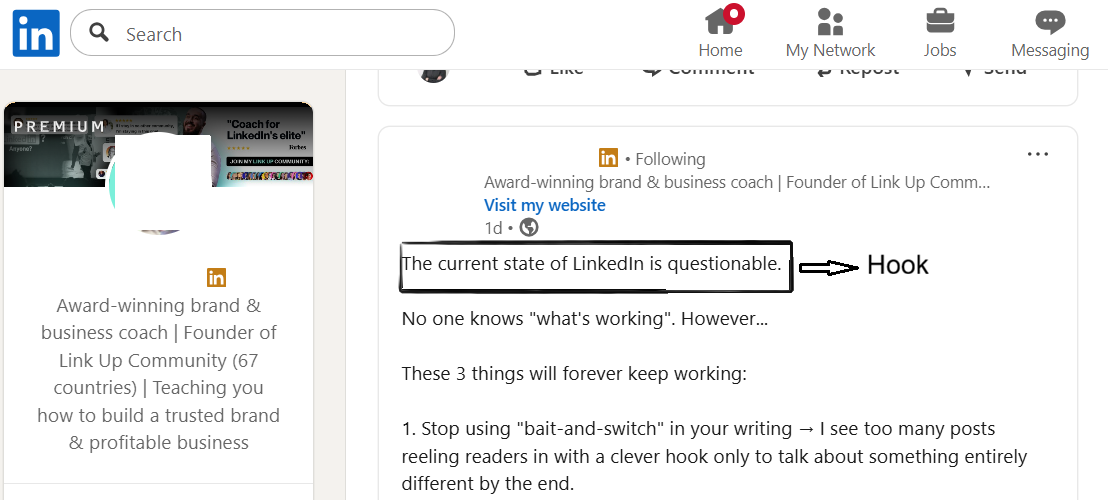
The LinkedIn feed is more crowded than ever. With millions of professionals sharing content every single day, how do you make sure your voice gets heard? The answer lies in the first one or two lines of your post: the hook.
In a world of shrinking attention spans and endless scrolling, a powerful hook is no longer just a nice-to-have; it's the single most important element of your LinkedIn content strategy. If you're not grabbing your audience's attention instantly, you're losing them. This post will explore why hooks are the future of LinkedIn content and how you can write them to stop the scroll and drive meaningful engagement.
What is a Hook and Why Does It Matter?
A hook is the opening of your post, designed to capture your reader's interest and compel them to click "see more." Think of it as the headline of your article or the subject line of your email. It's your one shot to make a first impression.
In the fast-paced environment of the LinkedIn feed, you have mere seconds to convince someone that your content is worth their time. A great hook does this by creating curiosity, promising value, or tapping into an emotion. Without a strong hook, even the most insightful and well-written post will go unnoticed.
How is the LinkedIn Landscape Changing?
The way we consume content on LinkedIn is constantly evolving.
Here are a few key trends that make hooks more critical than ever:
The Rise of AI: Artificial intelligence is making it easier for everyone to create content. While this has its benefits, it also means more noise and more competition. Your ability to write a unique and compelling hook is what will set your content apart from the flood of AI-generated posts.
Video is Still King: Video content continues to dominate social media, and LinkedIn is no exception. However, even with video, the first few seconds are crucial. Your hook, whether it's in the caption or the opening scene of your video, needs to be sharp and engaging.
Authenticity Wins: Users are craving genuine connection and value. Clickbait-y hooks are becoming less effective as people are getting better at spotting them. The future of hooks lies in their ability to be both attention-grabbing and authentic, promising real value and delivering on it.
What Makes a Hook Effective?

So, what separates a weak hook from one that stops the scroll?
An effective hook usually has one or more of the following characteristics:
It's Specific: Vague hooks are forgettable. Use numbers, data, and concrete examples to make your hook more impactful.
It's Emotional: People connect with stories and emotions. A hook that taps into a reader's pain points, aspirations, or frustrations will always perform well.
It's Unexpected: Surprise your audience with a controversial statement, a surprising statistic, or a unique perspective. The element of surprise is a powerful tool for capturing attention.
It's Value-Driven: Your audience is always asking, "What's in it for me?" Your hook should clearly communicate the value they will get from reading your post.
Actionable Tips for Writing Better Hooks
Ready to start writing hooks that get results?
Here are some practical tips you can apply today:
Start with a Question: Questions are a great way to engage your reader's mind and make them curious for the answer.
Use a Bold Statement: Make a strong claim or state a controversial opinion to grab attention. Just be prepared to back it up in the rest of your post.
Tell a Story: Start with a personal anecdote or a relatable story. Storytelling is a powerful way to build connection and draw your reader in.
Leverage Lists and Numbers: Posts that start with "5 ways to..." or "The #1 mistake..." are consistently popular because they set clear expectations and promise actionable advice.
Ready to write scroll-stopping hooks?
Want to skip the guesswork? Try the free EXEED AI Hook Generator. Paste your LinkedIn post and get 10 scroll-stopping hooks instantly, each using a different technique tailored to your post's objective.
Read more on our blog and follow us on LinkedIn:
_